

Somewhere around 2010, my high school math teacher got one of the first next-gen SMART Boards at our school. I remember the chatter, the neighboring teachers coming to see it, the sense that something important was happening. And I remember, even as a teenager, noticing that what was happening on that board wasn’t really different from what had been happening on the chalkboard before it. The technology was new. The teaching wasn’t. It was an expensive, interactive surface being used as a display screen.
That moment didn’t make me cynical about technology in education. If anything, it sharpened a question I was already working through from the other direction. I was learning more from early Minecraft, YouTube, and shared blog spaces than I was from most of my formal coursework. Not because the content was better, certainly, but because those spaces invited me to think critically, create things, and collaborate with people I’d never meet in person. The gap between what technology could do for learning and what it was actually being asked to do in schools felt enormous.
That gap is still what drives my work.
What I Do
I’m a Learning Experience Designer and Digital Learning Specialist at Black Hills Special Services Cooperative, based in Rapid City, South Dakota. My work spans statewide Canvas LMS administration, professional development design and facilitation, instructor coaching, and building tools and automations that help educators spend less time on busywork and more time on the work that actually matters. I’m also pursuing a Doctor of Education in Learning, Design, and Technology at the University of Wyoming.
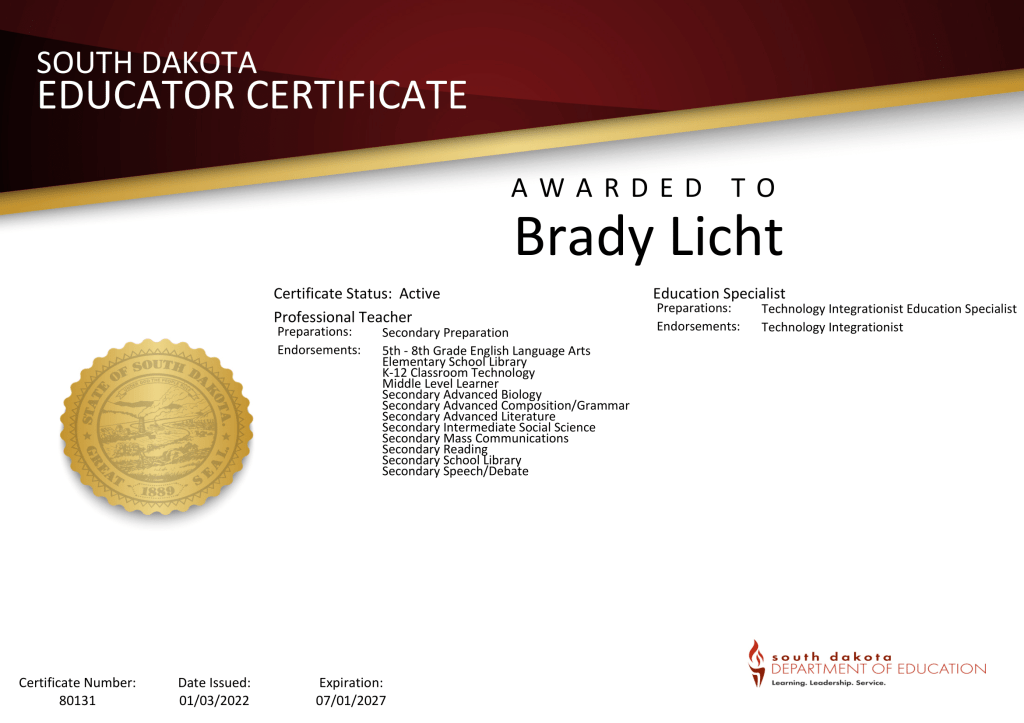
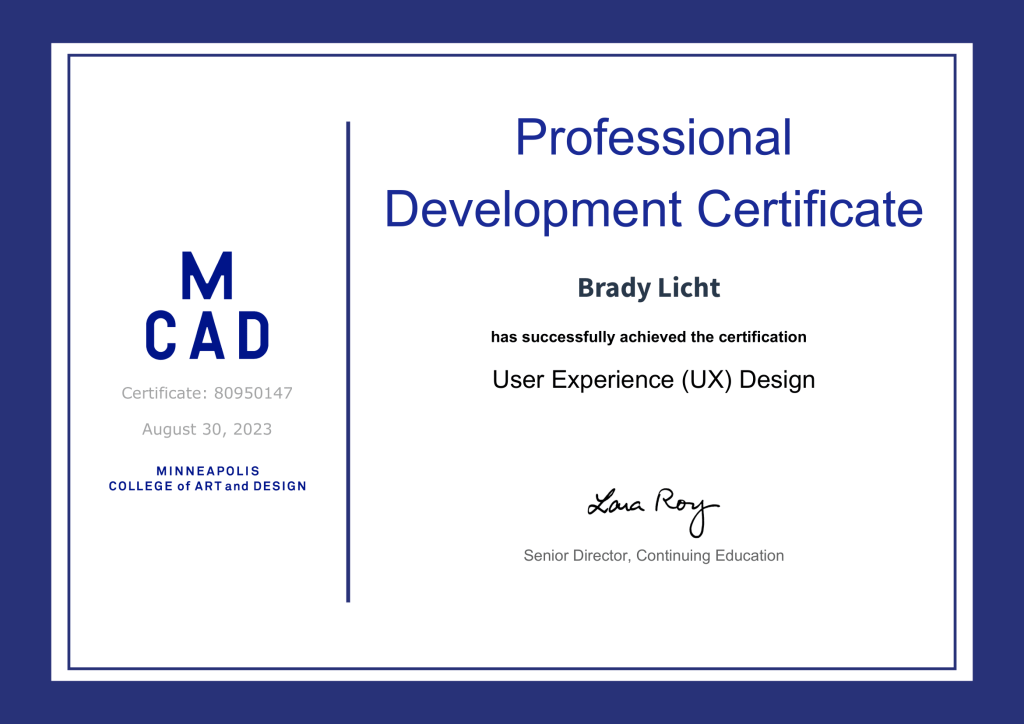
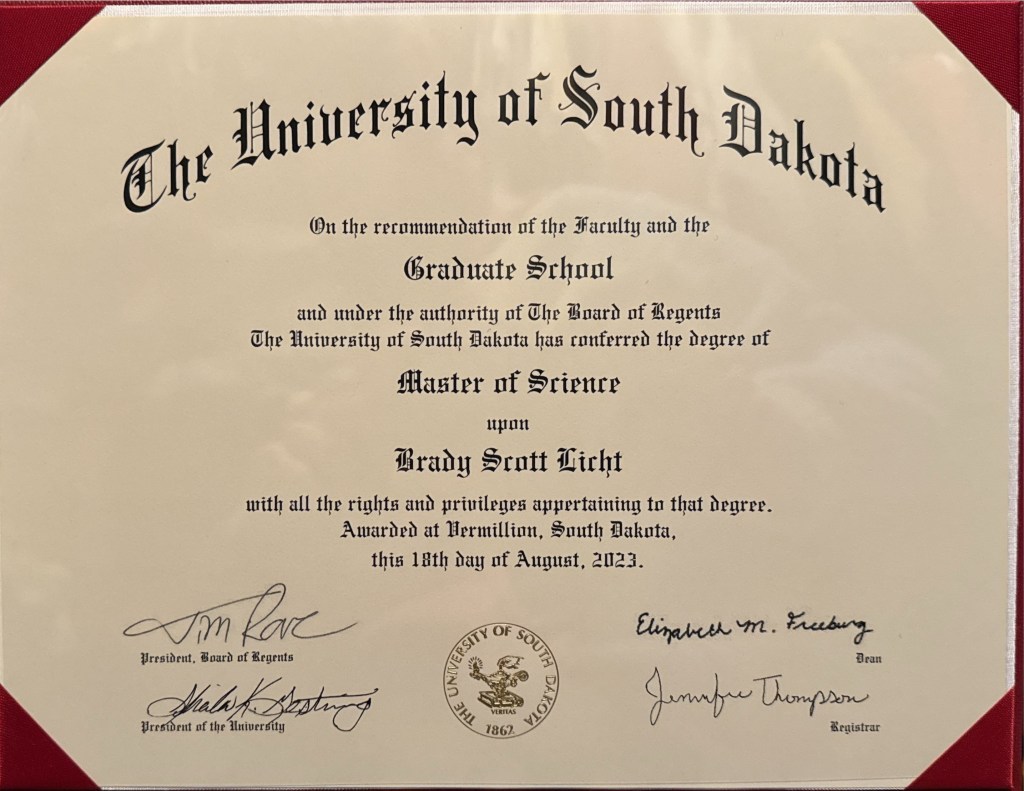
My background started in K-12 English Language Arts. I taught in a rural school district in western South Dakota and later at an alternative, competency-based high school program in Rapid City. That classroom experience is the foundation for everything I do now: I think about learning design from the perspective of someone who has been in the room, trying to make something work with the resources and constraints that were actually available.
What I Think About
My perspective on educational technology is, to put it directly, skeptical of the industry and optimistic about the practitioners. I believe that most of the problems in EdTech are not technical problems. They’re problems of incentive, design, and power. Who builds the tools? Who profits from them? Who gets locked into them? And who gets left out when the budget runs dry or the vendor changes their pricing model?
I write and think about these questions through a few recurring lenses. One is speculative fiction, particularly the work of Ursula K. Le Guin, whose novels offer frameworks for imagining how technology, community, and ethics interact in ways that business case studies rarely do. Another is a systems thinking approach grounded in natural systems, where the design principles that sustain ecosystems and environments offer a more resilient and resource-conscious foundation than the ones our industry tends to default to. And a third is a personal Zen practice that has shaped how I approach complexity, uncertainty, and the temptation to over-engineer solutions.
In practical terms, this means I tend to advocate for simpler tools over complex ones, open-source over proprietary, educator agency over vendor dependency, and designs that work in low-bandwidth, low-resource contexts rather than assuming ideal conditions. I’d rather help someone build a Google Apps Script that solves their actual problem than sell them a platform subscription that solves a problem they don’t have.
What I Make
Beyond my work at BHSSC, I publish articles, open-source tools, and resources at this site. A few things you’ll find here:
- Articles and opinion pieces on topics ranging from the hidden costs of EdTech complexity to the ethics of AI-assisted automation in schools. I write from a position I’d describe as “I did it imperfectly, you can too,” which means I try to be transparent about the process, including the parts that didn’t work, rather than presenting polished conclusions.
- WebTools, a growing collection of Google Apps Script-based tools that I build and give away. These are practical, configurable, sheet-bound applications designed for educators and teams who want to solve real problems without buying another platform. The FAQ Chatbot, Canvas Auto Pacer, and Student Roster Generator are a few examples.
- Homegrown Learning: A Seed Packet for Trainers, a Creative Commons-licensed book about designing learning experiences that emerge from local context rather than imported templates. It draws on biomimicry, calm design, and life-centered design principles, and it’s freely available as a digital draft with a print-on-demand option.
- E-Learning Lane, a podcast where I work through EdTech and learning design questions during my commute. It’s informal, occasionally bumpy in audio quality, and always framed as a question rather than an answer.
Where I Work From
I live and work in Rapid City, South Dakota, and most of my professional work happens across the Great Plains. That geography matters. The educators I work with are often managing multiple roles in small districts, navigating connectivity challenges, and making decisions with limited budgets. My approach to learning design is shaped by those realities, not by the conditions of well-resourced urban districts or corporate L&D departments. I build for the contexts I actually encounter.
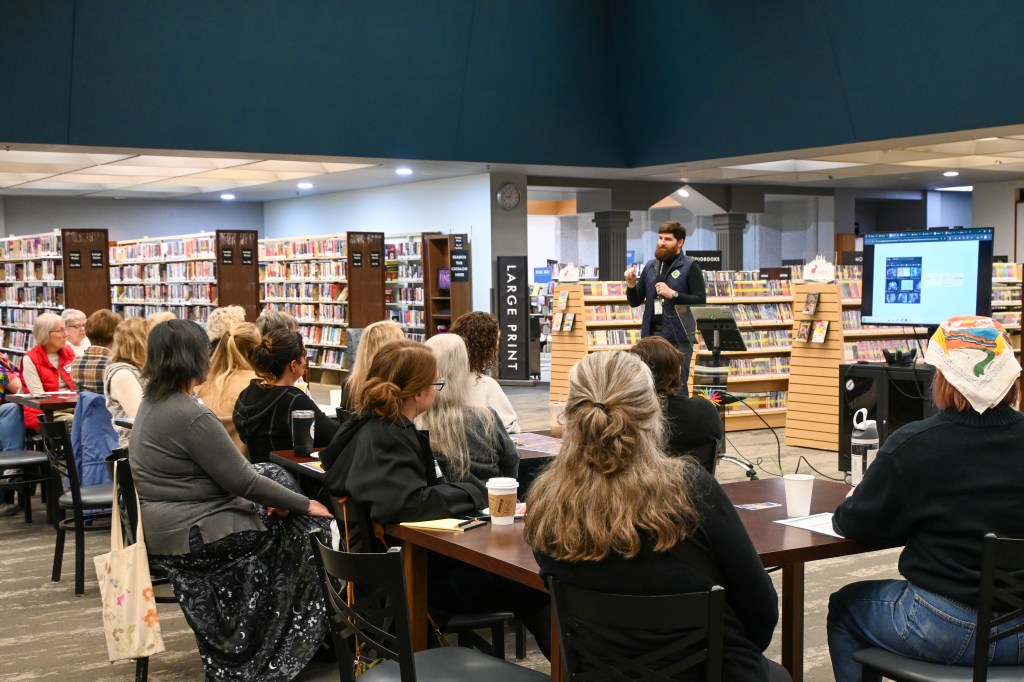
Let’s Connect
If any of this resonates with your own work, or if you have questions, pushback, or ideas you’d like to talk through, I’d welcome the conversation. You can email me at licht.education@gmail.com or BLicht@bhssc.org, and you can find more of my work throughout this site.
 Brady Licht