
Background and Context
Teaching in Bison, South Dakota presented unique opportunities and challenges for implementing Socratic seminars. As a first-year teacher working with grades 7-12 in a rural setting, I recognized the need for a pedagogical approach that would engage students across different grade levels while building critical thinking and discussion skills. Weekly Socratic seminars became the cornerstone of my teaching practice, evolving into a comprehensive system.
Looking back, these seminars marked the beginning of my journey toward inquiry-based teaching and student autonomy. What started as a structured discussion format grew into a broader philosophy about student voice and community-building in education.
Initial Implementation
Preparation Phase
The implementation of weekly seminars required careful consideration of several key elements:
- Physical Space Configuration
- Arranged desks in circles to promote eye contact and equal participation
- Created flexible seating arrangements for different class sizes
- Established clear sight lines for all participants

- Text Selection Strategy
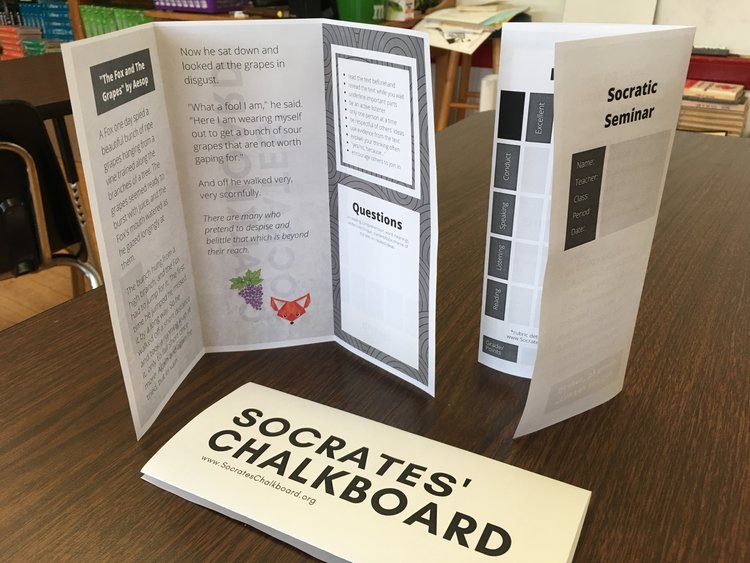
- Curated diverse materials ranging from Aesop’s “The Fox and the Grapes” for younger students to Walt Whitman’s “Song of Myself” for advanced discussions
- Incorporated visual texts like Thomas Cole’s “The Course of Empire” series
- Selected powerful speeches like Sojourner Truth’s “Ain’t I A Woman?” to encourage deeper social analysis
Structural Framework
Drawing from the materials I developed, each seminar followed a consistent structure:
- Pre-seminar preparation
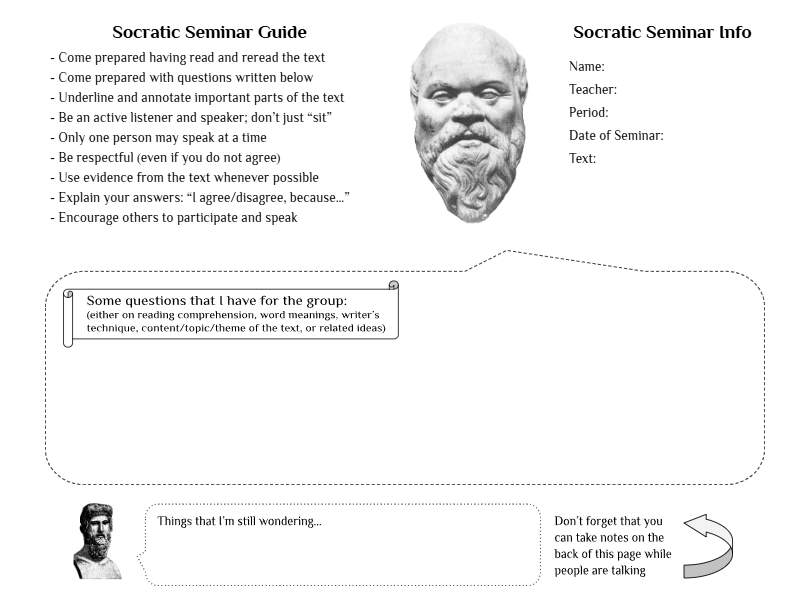
- Distribution of carefully formatted worksheets with clear guidelines
- Initial reading and annotation instructions
- Question development using provided frameworks
- Day-of procedures
- Text rereading period
- Circle formation protocol
- Implementation of rhetoric slips based on “They Say/I Say” patterns
- Post-seminar reflection
- Written reflection assignments
- Peer feedback sessions
- Goal setting for future seminars
Supporting Student Discussion
Rhetoric Slips Innovation
The rhetoric slips system, one of my most successful innovations, grew from studying the “They Say/I Say” approach to academic writing. These slips provided students with concrete ways to:
- Enter discussions (“According to the text…”)
- Build on others’ ideas (“To add to that point…”)
- Respectfully disagree (“While I see your perspective…”)
- Include peers (“What do you think about this, Sarah?”)
These scaffolds proved particularly valuable for students who struggled with spontaneous discussion participation.

Evolution and Reflection
What Worked Well
Several components proved particularly effective:
- Consistent Weekly Schedule
- Built student confidence through repetition
- Allowed for incremental skill development
- Diverse Text Selection
- Maintained student interest through varied genres
- Provided multiple entry points for discussion
- Structured Support Systems
- Rhetoric slips scaffolded participation
- Clear rubrics guided expectations
- Reflection protocols reinforced learning
What I Would Change
Reflecting on this experience years later, I would make several modifications:
- Gradual Implementation
- Begin with smaller discussion groups
- Incorporate observation periods where students watch effective discussions
- Provide more structured practice with specific discussion skills
- Enhanced Accessibility
- Integrate live translation technology for exchange students
- Create differentiated preparation materials
- Develop additional visual supports
- Technology Integration
- Incorporate digital annotation tools
- Enable remote participation options
- Create recorded examples of effective discussions
Impact on Teaching Philosophy
This experience fundamentally shaped my approach to education. The weekly seminars revealed how student-led discussions could transform classroom dynamics and build genuine learning communities. Watching students develop from hesitant participants to confident discussion leaders demonstrated the power of structured autonomy in education.
The creation of supporting materials – from rhetoric slips to rubrics – taught me the importance of scaffolding student independence. These tools, which began as simple discussion aids, evolved into the foundation for Socrates’ Chalkboard and my broader vision of inquiry-based education.
From Classroom to Website and Beyond
The experience of implementing these seminars led to the creation of Socrates’ Chalkboard, a website designed to share these resources and insights with other educators. Though the website would only operate for a year due to the competing demands of my master’s program and other professional projects, it served as an important platform for documenting and sharing these teaching practices.
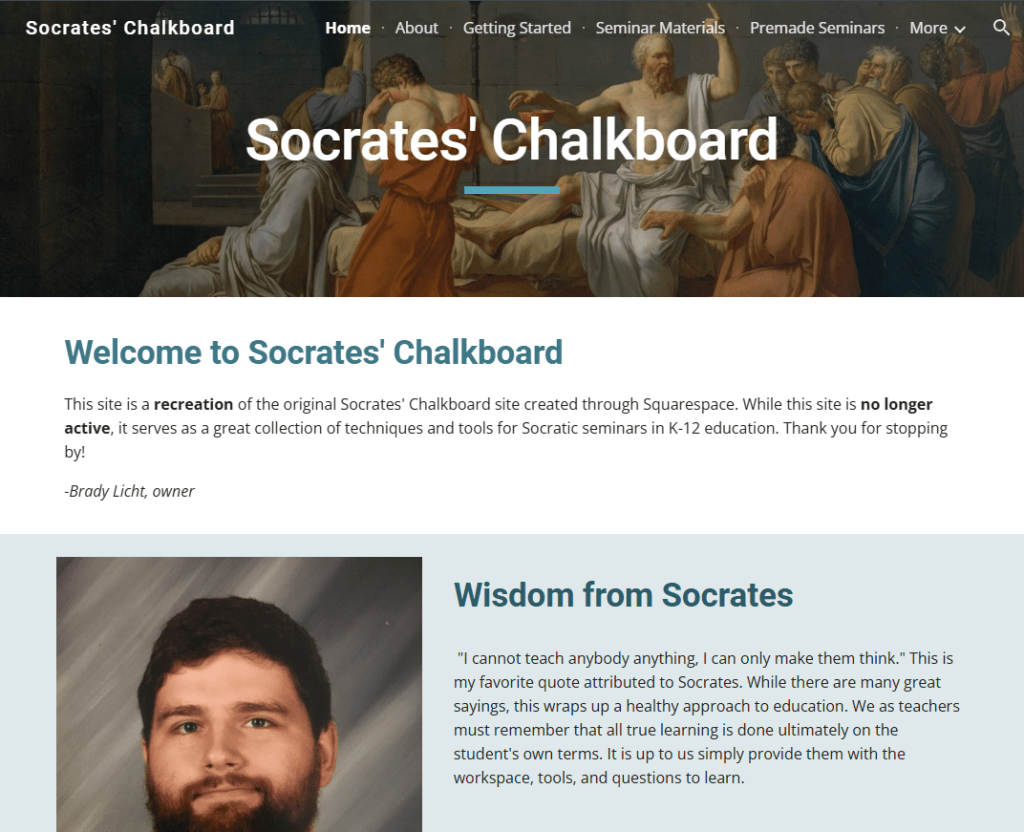
The limited run of the website highlighted an important lesson about sustainable resource sharing in education: even valuable resources need substantial time and energy to maintain. While the website itself was temporary, the materials developed for it – including the rhetoric slips, seminar worksheets, and rubrics – continue to be shared through other channels and have influenced my subsequent work in education.
Legacy and Lessons Learned
The brevity of the website’s existence actually reinforced one of the key principles I learned from Socratic seminars: the importance of focused, intentional effort over maintaining appearances. Just as students learned to value quality of contribution over quantity in discussions, I learned to value the impact of well-developed resources over the longevity of their hosting platform.
Conclusion
The implementation of weekly Socratic seminars in Bison High School did more than improve student discussion skills – it launched my ongoing exploration of student-centered learning. While the original program had its challenges, it demonstrated how thoughtful structure and appropriate supports could help students take ownership of their learning.
The evolution from classroom practice to comprehensive teaching resource reflects a deeper understanding of how to build student autonomy and community. As education continues to evolve, these foundational experiences with Socratic seminars inform my approach to creating learning environments where student voice and inquiry drive genuine learning.
The materials developed during this time – from the carefully crafted seminar worksheets to the innovative rhetoric slips – continue to serve as practical tools for educators while representing larger principles about student engagement and educational equity. This experience demonstrates that with proper support and structure, all students can engage in meaningful academic discourse and develop as independent thinkers.
Downloads
Socrates Chalkboard Google Drive Folder
 Brady Licht
Leave a comment