

Summary
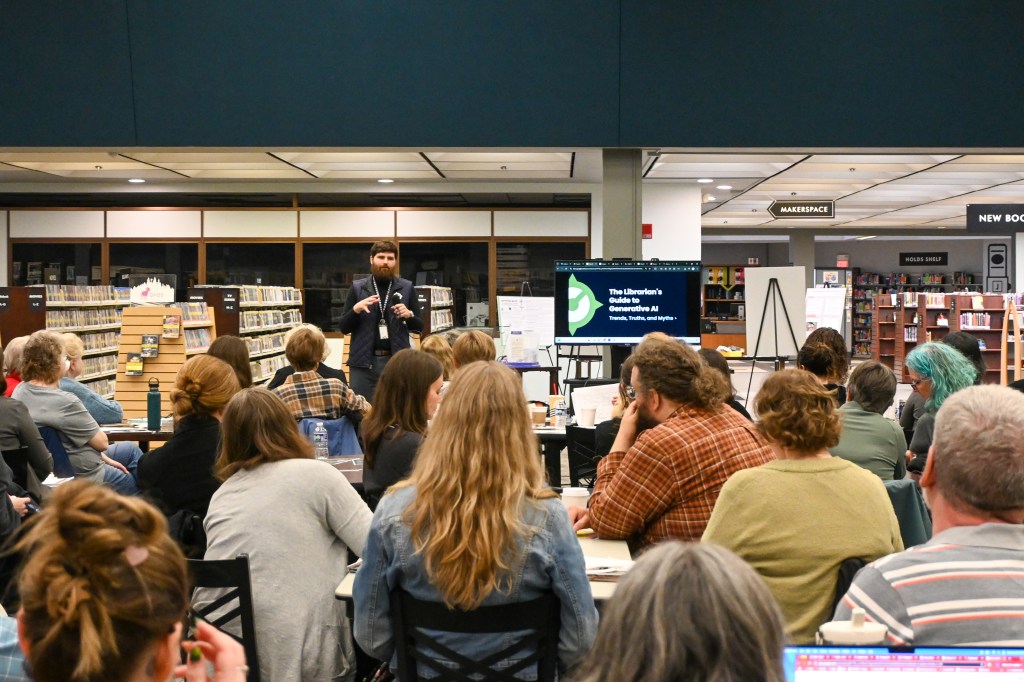
In May 2025, I delivered the keynote address “The Librarian’s Guide to Generative AI: Trends, Truths, and Myths” at the Black Hills Library Mini-Conference in Rapid City, South Dakota. The presentation provided librarians with a practical understanding of generative AI fundamentals, demonstrated library-specific applications, addressed ethical considerations, and facilitated collaborative discussions on implementation strategies. The session successfully balanced technical education with practical application, resulting in high engagement and actionable takeaways for library professionals from diverse settings across the region.
The Problem
Knowledge Gap and Uncertainty
Libraries across South Dakota were facing significant challenges with generative AI:
- Technological uncertainty: Many librarians possessed limited understanding of how generative AI functions, leading to hesitation in adoption.
- Resource allocation questions: Libraries struggled to determine which AI tools warranted investment of time and resources.
- Ethical concerns: Questions about data privacy, bias, and content authenticity created implementation barriers.
- Patron education needs: Libraries needed strategies to fulfill their role in teaching AI literacy to communities.
- Collection development challenges: The rise of AI-generated “slop content” posed challenges for maintaining quality standards.
Contextual Considerations
The audience consisted primarily of:
- Rural and small-town librarians with varying levels of technological expertise
- Library trustees and board members evaluating potential investments
- Library staff responsible for programming and patron education
This diverse audience needed content that addressed fundamental concepts while providing practical applications relevant to their specific environments.
Solution Design and Rationale
Presentation Structure
I structured the keynote to progressively build understanding through four interconnected segments:
- Truth: Understanding the Fundamentals
- Defined generative AI and its capabilities
- Distinguished pattern recognition from understanding
- Explored how AI works through interactive demonstrations
- Rationale: Creating a shared foundation of understanding was essential before addressing applications.
- Impact: Librarians and Libraries
- Presented research on librarian perceptions
- Explored practical applications in various library functions
- Demonstrated specific tools relevant to library settings
- Rationale: Connecting AI to familiar library functions made abstract concepts concrete and actionable.
- Critical Considerations: Limitations and Ethics
- Addressed bias through visual examples
- Demonstrated hallucinations and their implications
- Discussed data privacy and security concerns
- Examined AI-generated content challenges
- Rationale: Librarians needed to understand limitations to implement AI responsibly.
- Collaborative Discussion: Implementation Strategies
- Utilized a modified World Café format
- Facilitated table discussions on key questions
- Promoted peer learning and shared problem-solving
- Rationale: Collaborative discussion allowed librarians to contextualize content for their unique settings.
Methodological Choices
Several specific design decisions shaped the presentation:
- “Human in the Loop” Framework: This ethical implementation model provided a structured approach to maintaining human judgment in AI processes.
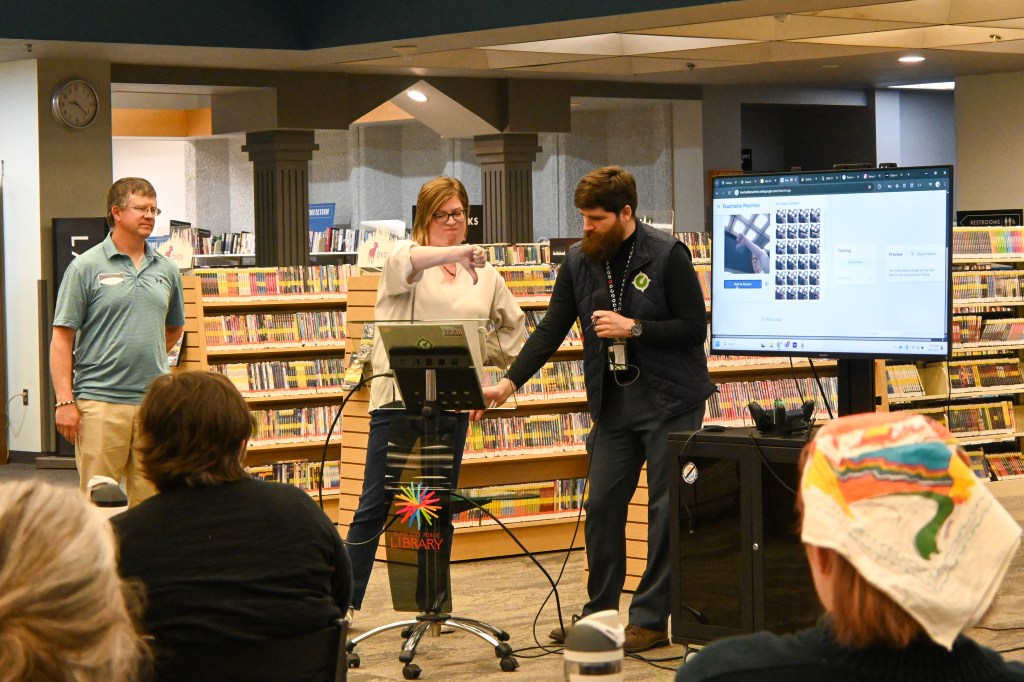
- Interactive Technology Demonstrations: Hands-on elements like Teachable Machine and Quick Draw illustrated AI principles without requiring technical expertise.
- Visual Case Studies: Examples of bias in image generation and hallucinations in responses made abstract concerns tangible.
- Resource Differentiation: Providing both free and paid tool options ensured relevance for libraries with different budget constraints.
What Worked Well
Effective Elements
- The modified World Café discussion format generated substantial engagement and knowledge sharing. The focused questions prompted meaningful conversation between librarians from different settings, resulting in collaborative solution-building.
- The “Human in the Loop” ethical framework resonated strongly with attendees. This approach aligned perfectly with librarians’ professional values of critical evaluation and human-centered service, making AI implementation feel more approachable.
- Visual demonstrations of AI limitations particularly the examples of bias in image generation of “Wyoming superintendents” and hallucinations in reference responses, created memorable learning moments. These examples transformed abstract concerns into concrete understanding.
- Balancing theoretical knowledge with practical applications helped librarians connect AI concepts to their daily work. Showing specific examples of metadata enhancement, programming support, and collection development applications made the technology’s relevance immediately apparent.
- Resource sharing and follow-up materials extended the learning beyond the keynote itself. Providing access to presentation slides, curated tool lists, and additional resources enabled continued exploration.
What Could Be Improved
Areas for Enhancement
- Time allocation for interactive elements proved insufficient. The hands-on demonstrations generated significant interest, but time constraints limited full exploration. Allocating more time for experimentation would deepen learning.
- Rural library-specific examples could have been more prominent. While the presentation included applications for various library types, more examples specifically addressing the challenges of small, rural libraries would enhance relevance for many attendees.
- Policy development guidance could have been more structured. While ethical considerations were thoroughly discussed, some librarians expressed interest in more concrete templates for developing institutional AI policies.
If I Were to Do It Again
Future Improvements
- Structure as a workshop rather than keynote to allow for extended hands-on practice with tools. This format would provide more time for experimentation and application while maintaining the theoretical foundations.
- Incorporate South Dakota-specific case studies by interviewing local librarians already implementing AI tools before the conference. These regional examples would enhance relevance and provide realistic implementation models.
- Develop a practical policy toolkit with templates, checklists, and decision frameworks that librarians could immediately adapt for their institutions. This would address the expressed need for concrete guidance on policy development.
- Include more discussion of AI literacy programming to help librarians develop patron education initiatives. Sample program outlines, activity ideas, and instructional materials would support this critical library function.
- Provide a tiered resource list categorized by library size, budget, and technological capacity. This would help librarians identify the most relevant tools for their specific circumstances.
- Add a follow-up virtual session scheduled a month after the conference to address implementation questions and showcase early adopter experiences. This would support sustained engagement with the material.
Conclusion
The keynote successfully addressed a significant knowledge gap among South Dakota librarians regarding generative AI, providing both conceptual understanding and practical applications. The combination of educational content, ethical frameworks, and collaborative discussion effectively equipped participants to approach AI technologies with greater confidence and critical awareness.
While time constraints limited some aspects of the session, the engagement level and post-conference resource utilization indicated strong impact. Moving forward, expanding this content into workshop format with more regionally-specific examples and concrete implementation tools would further enhance its value to the library community.
This experience reinforced the critical role librarians play in their communities as guides through technological transitions—a role that requires both technical knowledge and the traditional wisdom of the profession. By empowering librarians to embrace this dual function, the session contributed to ensuring that AI tools serve to enhance rather than diminish the human-centered mission of libraries.
 Brady Licht