
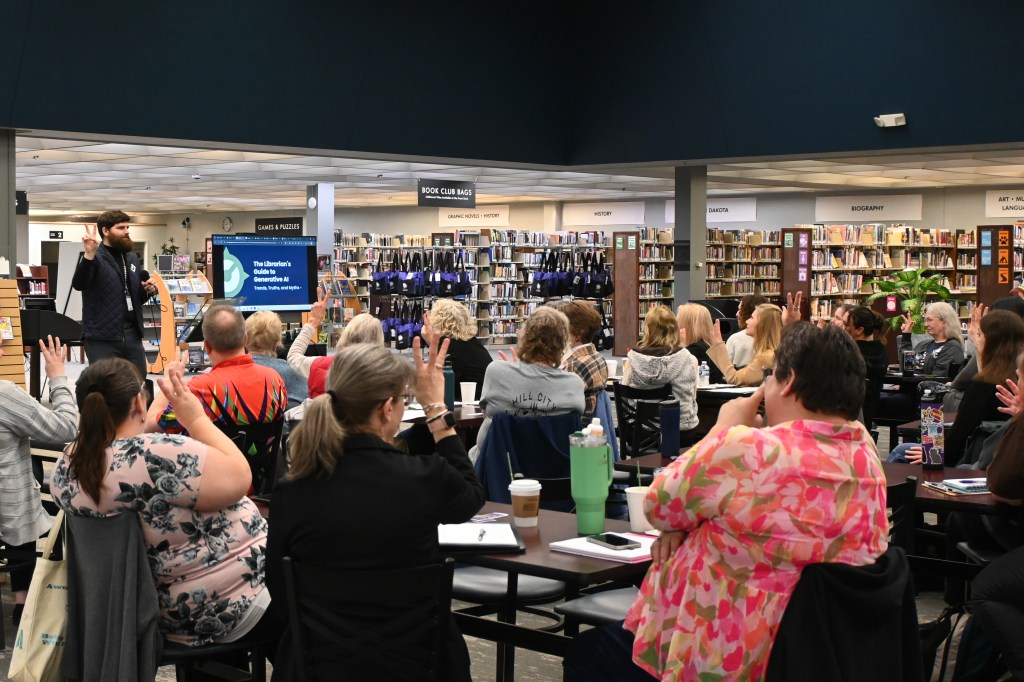
A keynote at the Black Hills Library Mini-Conference that introduced rural and small-town librarians to generative AI through a four-part structure built around a “human in the loop” ethical framework, interactive demonstrations, and a modified World Café discussion.
- Project Type: Conference keynote presentation
- Audience/Client: Black Hills Library Mini-Conference; librarians, library trustees, and library staff across the region
- Timeline: May 2025
- Role: Keynote speaker and session designer
- Format & Deliverables: Keynote titled “The Librarian’s Guide to Generative AI: Trends, Truths, and Myths”; four-segment structure covering fundamentals, applications, ethics, and implementation; interactive AI demonstrations; modified World Café discussion; follow-up resources
The Situation
By spring 2025, librarians across western South Dakota were being asked about generative AI from every direction. Patrons wanted to know what it was, boards wanted to know whether to spend money on it, and collection development was already running into AI-generated “slop” books. Many of the librarians being asked had limited technical background and worked in small, rural libraries where one person covers every role, so the questions landed on people with the least time to sort them out.
The Approach in Brief
I built the keynote so that understanding came before applications. It opened by separating what these systems do (pattern-matching) from what people tend to assume they do (understanding), then moved through library uses, limitations and ethics, and finally a modified World Café where librarians worked through implementation questions at their tables. A “human in the loop” framework held the four parts together, since keeping human judgment at the center fit the profession’s existing values better than any tool list would.
What Came Out of It
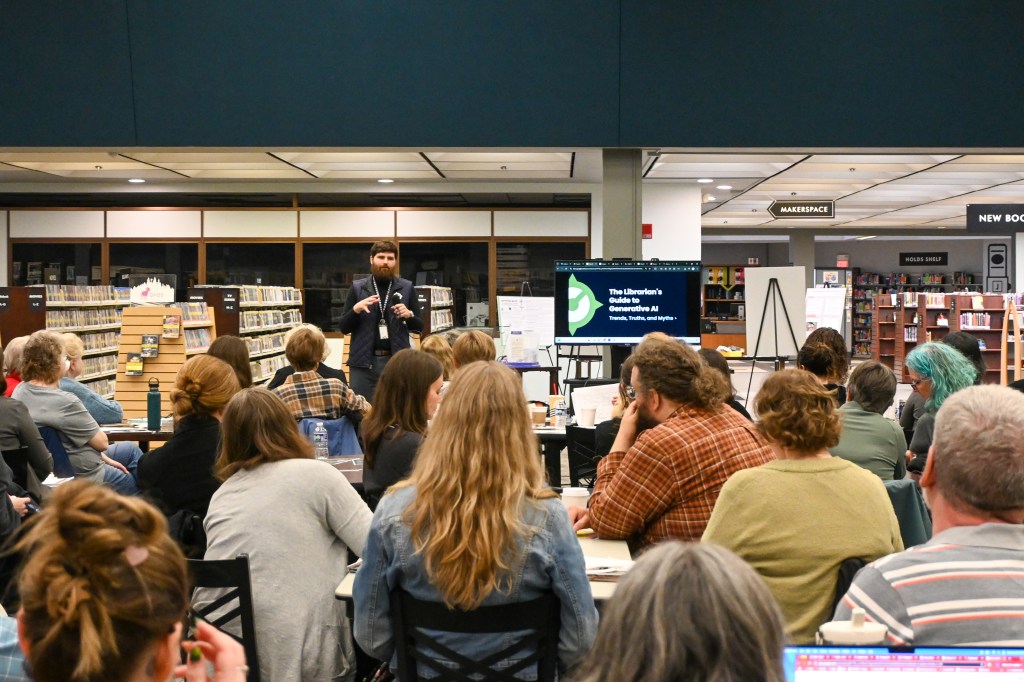
The World Café was the most productive part of the session. Librarians from very different settings compared notes on what they were already seeing and worked through the questions together rather than waiting on me for answers. The human in the loop framing landed well, and the demonstrations of limitations, especially an image generator’s idea of what “Wyoming superintendents” look like and a set of confidently wrong reference answers, did more to make bias and hallucination concrete than any explanation could have. Several librarians asked afterward for concrete policy templates, which told me where the next piece of work was. Attendees left with the slides, a curated tool list, and follow-up resources.
Key Takeaway
Librarians already have the professional habits AI literacy needs, in critical evaluation, source checking, and service built around people. The most useful thing a session like this can do is connect the new technology to those habits rather than ask people to adopt a new mindset.
Deeper Context
The audience was mixed in a way that shaped every decision. Rural and small-town librarians with widely varying comfort with technology sat alongside library trustees and board members weighing possible investments, and staff responsible for programming and patron education. The trustees needed enough grounding to evaluate spending, the programming staff needed something they could turn into patron education, and everyone needed a shared starting point before any of that would make sense. The libraries represented also ranged from well-resourced to very small, which meant any tool recommendation had to include free options alongside paid ones.
The Journey
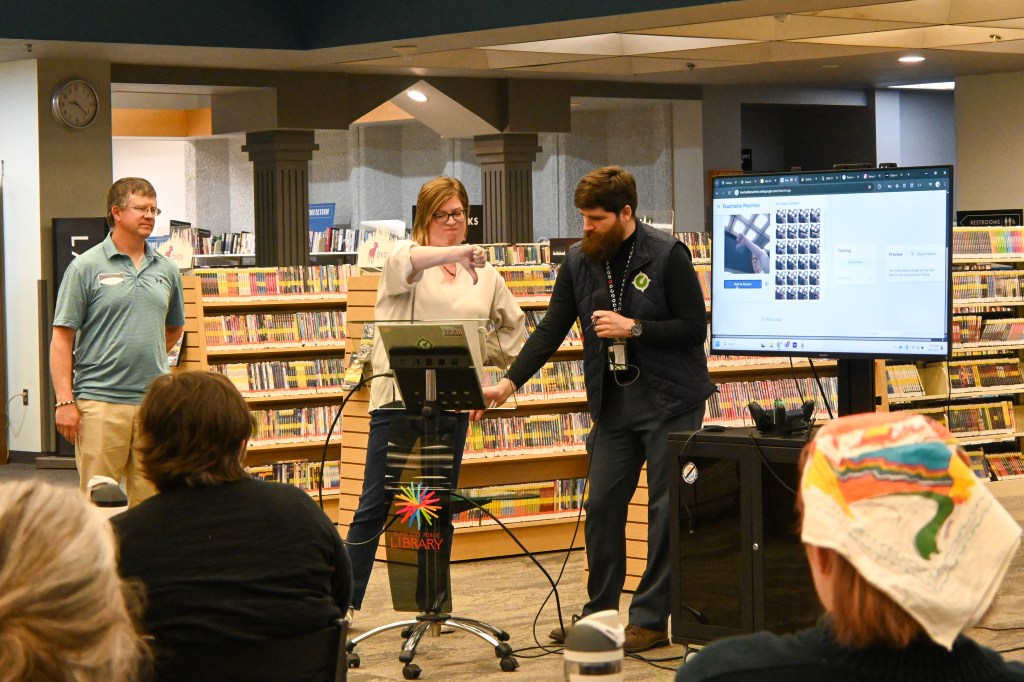
The four segments were designed to build on each other. The first, on fundamentals, defined generative AI and used hands-on demonstrations like Google’s Teachable Machine and Quick, Draw! to show pattern recognition at work without asking anyone to understand the math. I put this first because every later conversation depended on a shared, accurate picture of what the technology is. The second segment turned to librarians and libraries, drawing on research about librarian perceptions and showing applications in metadata, programming support, and collection development, so the abstract material had somewhere familiar to land.
The third segment took on limitations and ethics directly: bias in image generation, hallucinated reference responses, data privacy, and the flood of AI-generated content into collections. I wanted this to come after applications rather than before, so that the limitations read as things a librarian would need to manage in practice rather than reasons to dismiss the topic. The last segment handed the room over to the modified World Café, where tables worked through focused implementation questions and rotated to build on each other’s answers. That shift from listening to working was deliberate, since the people in the room knew their own libraries far better than I did.
The Work Itself
The slide deck from the keynote is available to download below. It includes the four-segment structure, the demonstration prompts, and the World Café questions.
What I’d Change
The biggest change would be the format. The demonstrations drew real interest, but a keynote didn’t leave enough time for people to try the tools themselves, and this content would work better as a workshop with extended hands-on practice. I’d also do more homework on the audience’s own context, since the presentation covered many kinds of libraries but gave less attention than it should have to the specific constraints of small rural ones. Interviewing a few South Dakota librarians who were already experimenting with AI beforehand would have given me local examples instead of general ones.
I’d also build the follow-up into the design rather than leaving it to a resource list. The requests for policy templates showed that ethics discussion without a concrete next step leaves people with good questions and nowhere to take them. A next version would include 1) a practical policy toolkit with templates and decision checklists, 2) sample outlines for AI literacy programming for patrons, 3) a resource list sorted by library size, budget, and capacity, and 4) a virtual follow-up session about a month later to work through what people ran into once they tried things.
Connections
For the family and patron side of AI literacy, see A Review of AI Literacy Books for Kids & Families. For the broader pattern of AI being folded into the tools libraries and schools already depend on, see Paywalls, Lock-Ins, and Bugs in Educational Technology. If you’re planning something similar for librarians or another group, you can reach me at licht.education@gmail.com, and there are more tools, articles, and resources at bradylicht.com.

